
IS YOUR BLADDER A DESERT?
The Truth About Hydration, Inflammation & Urgency
Download your worksheet Link (add a tokin images of a worksheet )
Click Play to listen to audio module on site.
02 MODULE
Listen offline or on your phone. Click the download button and Save to your location choice. If you lose it, look in your Downloads folder.
02 MODULE
The Missing Context
I'm so happy to see you here today. This module may challenge some things you’ve been told about bladder health, especially the idea that drinking less water is the safest solution.
There is no reason to force change or follow rigid rules. You’re here to understand what’s been happening inside your body and why your bladder may have been reacting the way it has.
As you move through this lesson, notice what clicks and what feels surprising. This module is about creating a healthier internal environment so your pelvic system doesn’t have to work against chemistry, inflammation, or constant irritation.
MODULE 2
Changing the Conversation
THE BIOCHEMISTRY OF PELVIC COMFORT
Introduction: The "Desert" in Your Pelvis
Hydration, Inflammation & the "Irritable Bladder" Myth
If you've ever restricted your water intake to avoid the bathroom, you've engaged in a logical but biologically flawed survival strategy.
The common wisdom says: Less fluid = Less pee = Less trouble.
It makes perfect sense, right? If leaking is the problem, then reducing the amount of liquid going in should reduce the amount of liquid coming out. Simple math.
But here's what's actually happening. When you dehydrate your body, you're not just reducing urine volume. You're changing the entire chemistry of your internal environment. You're turning a flowing stream into a stagnant, concentrated pond. And that concentrated pond becomes caustic to the very tissues you're trying to protect.
In the world of urogynecology, the medical specialty focused on pelvic health, clinicians see this pattern all the time. Women come in with urgency, frequency, and burning sensations. They assume they have a bladder infection. Tests come back negative. What they actually have is a dehydration and inflammation problem that's making their bladder scream at them.
This module will break down the "why" behind the "how," shifting your perspective from seeing the bladder as a simple plumbing fixture to seeing it as a sophisticated sensory interface that's deeply affected by what you put into your body.
By the end of this lesson, you'll understand:
- Why concentrated urine is like acid to your bladder lining
- The protective "Teflon coating" your bladder has (and how to keep it healthy)
- Why chugging water doesn't actually hydrate you
- How inflammation turns up the "volume dial" on bladder sensitivity
- The surprising connection between dehydration and pelvic pain
- What actually works for smart, efficient hydration
Let's start by talking about what happens inside your bladder when you're not drinking enough water.
Section 1: The Chemistry of Irritation
Why Concentrated Urine Burns
Your kidneys have one primary job: filter waste from your blood and maintain electrolyte balance. They're working 24/7, processing everything you eat, drink, breathe, and absorb.
Here's the thing: when you drink less water, your kidneys don't stop filtering waste. They simply pack that same amount of waste into a smaller volume of liquid.
Think of it like making orange juice from concentrate. If you add the right amount of water, it tastes good. If you only add half the water, it's too strong, too acidic, too intense. That's what's happening in your bladder when you're dehydrated.
The "Caustic" Effect of Concentrated Urine
Your urine contains:
- Urea (a breakdown product of protein)
- Uric acid (a breakdown product of purines, found in meat and some vegetables)
- Creatinine (a waste product from muscle metabolism)
- Various other metabolic byproducts
In a well-hydrated person, these compounds are diluted. They're present, but they're not concentrated enough to cause irritation.
In a dehydrated person, the urine becomes hypertonic. That's a fancy way of saying it's more concentrated, more acidic, and more chemically irritating.
Here's what happens:
The pH Shift:
Highly concentrated urine is often more acidic. A healthy bladder can handle some acidity, but when the acidity level gets too high, it starts to irritate the bladder lining.
The Chemical Burn:
The delicate lining of your bladder (called the urothelium) is only a few cell layers thick. It's designed to be a barrier, but it's not invincible. Concentrated urine acts as a chemical irritant to this lining.
Imagine putting a drop of lemon juice on healthy, intact skin. You'd feel it, but it wouldn't really hurt. Now imagine putting that same lemon juice on a paper cut or chapped skin. It stings, right?
When you're chronically dehydrated, the bladder lining becomes "chapped." It's inflamed, thinned, and hypersensitive. Every drop of concentrated urine feels like a sting to the nerves underneath. Those nerves send a massive urgency signal to your brain: "Get this out of me NOW!"
So you rush to the bathroom. You pee. But it's only a small amount because your bladder isn't actually full. It just feels full because the nerves are being chemically irritated.
This is why some women feel like they have a Urinary Tract Infection (UTI) but the test comes back negative. It's not an infection. It's irritation. And the solution isn't antibiotics. It's hydration.
Section 2: The GAG Layer
Your Bladder's "Teflon™ Coating"
To understand bladder sensitivity, we need to talk about something most people have never heard of: the GAG layer.
GAG stands for Glycosaminoglycan.
It's a thick, mucous-like coating that sits on top of your bladder cells, like a protective shield. Think of it as your bladder's Teflon™ Coating or a waterproof layer.
The Protection Mechanism
The GAG layer's job is to prevent bacteria and irritating solutes in the urine from directly touching the bladder wall and the underlying nerves, called the sub-urothelial plexus.
When the GAG layer is intact and healthy, your bladder can hold urine comfortably. The protective layer keeps the acidic, concentrated urine from irritating the nerve endings underneath.
But when the GAG layer is compromised, those irritating compounds in the urine can "leak through" to the nerves. And when nerves get irritated, they fire. They send pain signals. They send urgency signals. They make you feel like you need to pee right now, even when your bladder is barely full.
What Compromises the GAG Layer?
Several things can degrade or thin this protective mucous layer:
- Chronic dehydration: The tissue needs water to produce mucous.
- Systemic inflammation: Inflammation breaks down protective barriers throughout the body.
- Hormonal changes: Estrogen supports the health of all pelvic tissues, including the GAG layer.
- Repeated UTIs: Infections damage the bladder lining.
- Certain medications: Like some chemotherapy drugs.
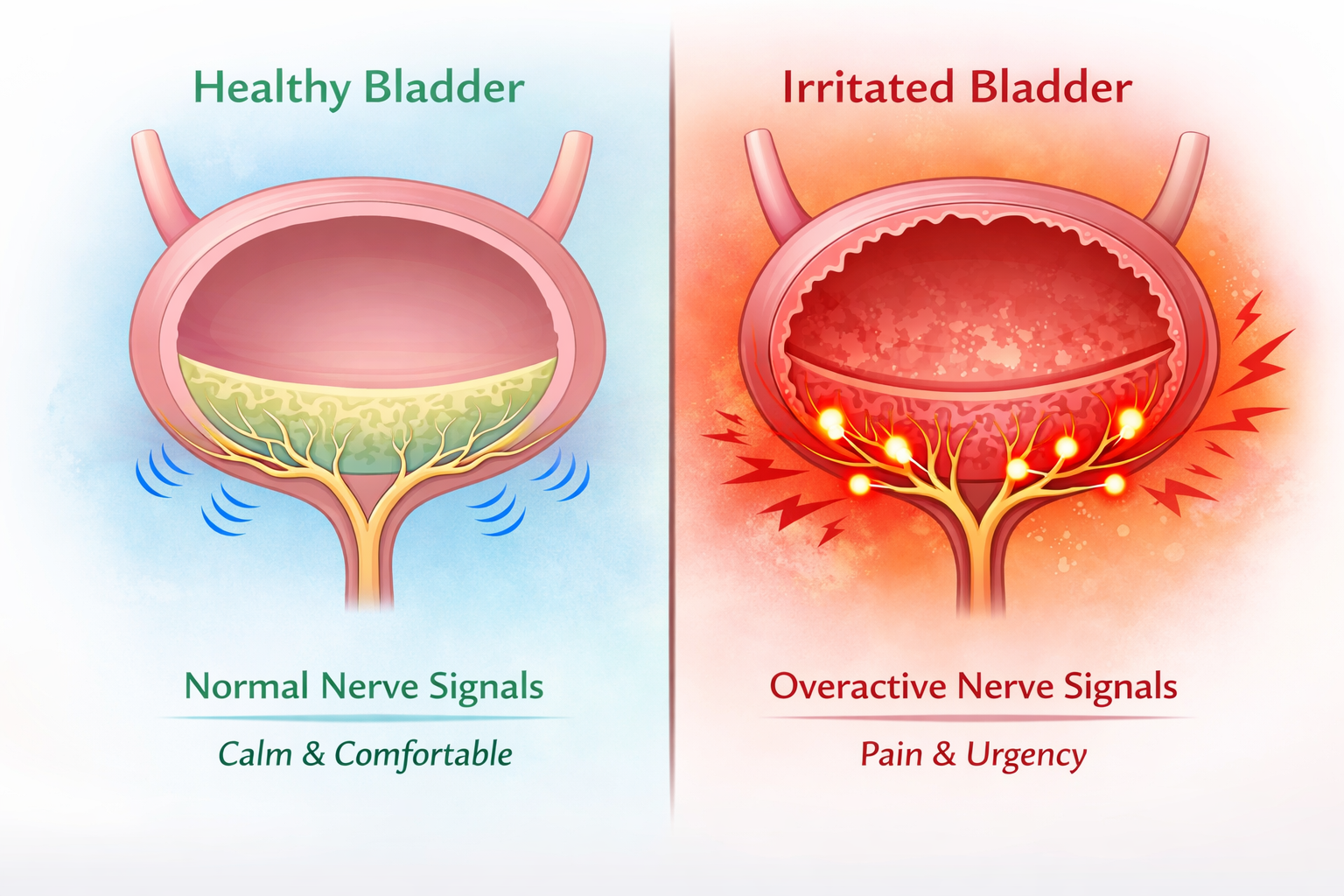
There's a condition called Interstitial Cystitis (IC) or Painful Bladder Syndrome (PBS) where the GAG layer is significantly compromised. Women with IC experience severe urgency, frequency, and pain even though there's no infection. It's essentially a "leaky bladder lining."
Most women don't have full-blown IC. But many women have a mildly compromised GAG layer due to chronic dehydration, inflammation, and hormonal changes. And that's enough to cause significant symptoms.
The Expert Insight
Here's what pelvic health specialists know: strengthening your pelvic floor will do nothing if your GAG layer is compromised.
You can do Kegels all day long, but if the actual bladder lining is irritated and hypersensitive, you're still going to feel urgency. You're still going to leak because your bladder is sending false "full" signals to your brain.
This is why we focus on hydration quality. We need to provide the raw materials, water, electrolytes, and nutrients, necessary to maintain this protective barrier.
SECTION 3: What Real Hydration Actually Means
Hydration Quality vs. "Volume Chugging"
One of the biggest mistakes women make when trying to "get healthy" is chugging large amounts of plain water all at once. You know the drill: you realize you haven't had any water all day, so you down 32 ounces in one sitting.
From a cellular hydration perspective, this is almost as ineffective as not drinking at all.
The "Flash Flood" Effect
Think about pouring water onto bone-dry soil. If you dump a gallon of water all at once, what happens? It doesn't soak in. It runs off the top. It pools. It causes erosion. The soil stays dry underneath.
Your body works the same way.
When you chug a large amount of water quickly, you trigger a rapid increase in blood volume. Your body senses this sudden influx and thinks, "Whoa, too much water! We need to get rid of this excess to maintain balance."
So, your kidneys immediately go into overdrive. They filter out the excess water and send it straight to your bladder. You end up peeing 15 minutes later. And your cells, your fascia, and your pelvic tissues? They're still thirsty.
The water went through you, not into you.
The Role of Electrolytes and "Structured" Water
Real hydration is a mineral-dependent process. Water doesn't just magically get absorbed into your cells. It needs help. It needs electrolytes.
Here's the basic science: water follows salt. More specifically, water follows sodium and potassium through channels in your cell membranes. These minerals operate the cellular pumps that pull water into your tissues where it's actually needed.
To get water into your pelvic tissues, your fascia, and your cells, you need:
Sodium and Potassium: These operate the cellular pumps that move water in and out of cells. Without adequate sodium, water just passes through your digestive tract and gets flushed out by your kidneys.
Magnesium: This mineral relaxes smooth muscle, including the smooth muscle of your bladder wall (the detrusor muscle). When your bladder muscle is chronically tight, it can contribute to urgency and spasms. Magnesium helps it chill out.
The Expert Perspective: Hydration Efficiency
Pelvic health specialists talk about hydration efficiency, not just hydration volume.
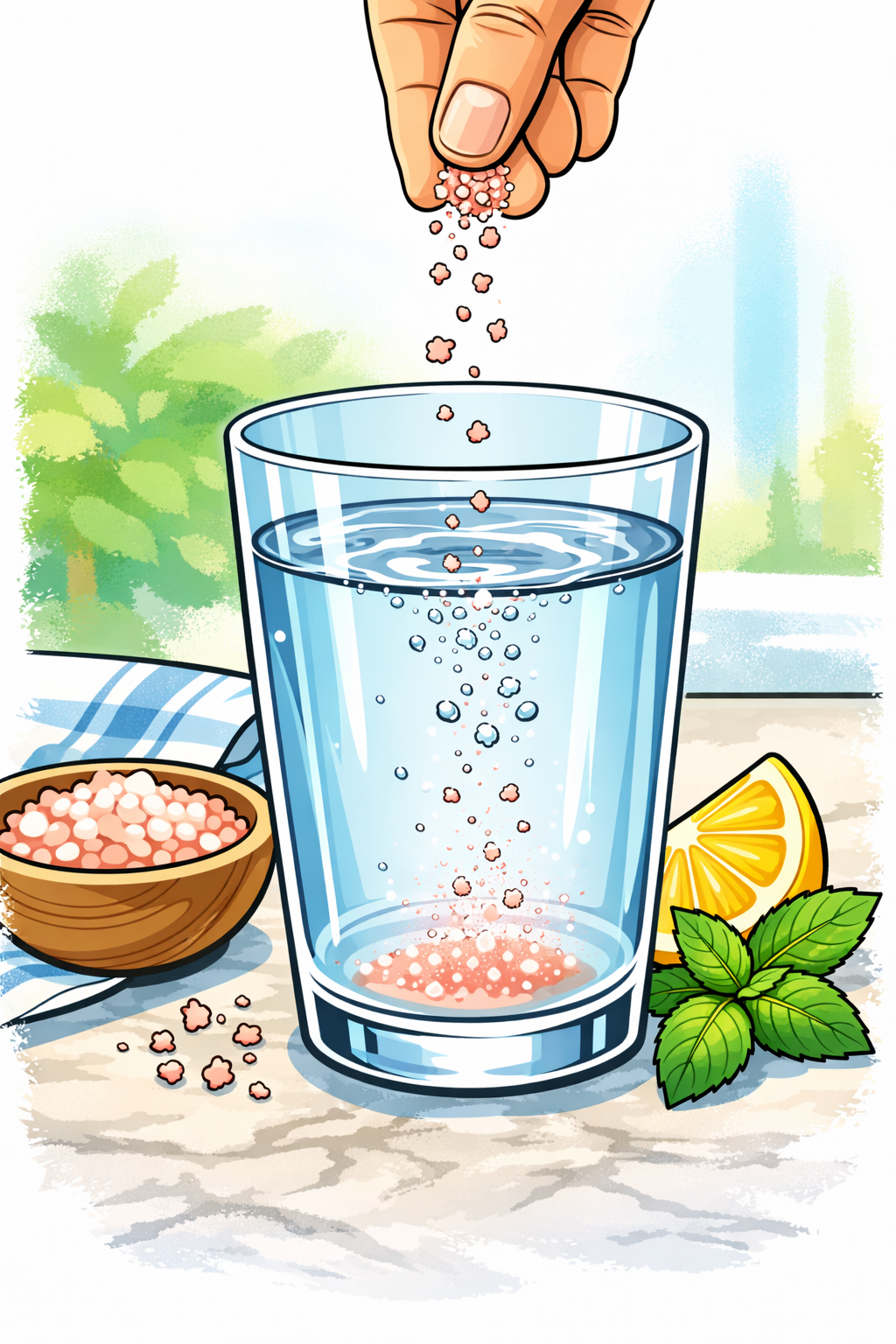
Adding a pinch of high; quality sea salt or electrolyte minerals to your water changes its osmotic pressure. This allows the water to linger in the interstitial spaces (the spaces between your cells) where it can actually lubricate the pelvic floor muscles, plump up the fascia, and support the GAG layer.
It's not about drinking more. It's about drinking smarter.
Practical Tip
Add a pinch of sea salt to each glass of water, or use a clean electrolyte powder (without artificial sweeteners or dyes). You're looking for sodium, potassium, and magnesium. Not sugar. Not fake flavors. Just minerals.
SECTION 4: My Personal Experience
Why I Believe Hydrogen Water Helps
I want to share something personal with you because it directly relates to what we're talking about in this module.
For years, I've been a "good water drinker." I always hit my daily water intake goals. I carry a water bottle everywhere. By all standard measures, I was hydrated.
But I was still waking up multiple times every night with an urgent need to pee. I'd barely make it to the bathroom, and when I did, it was never a full bladder. Just a small amount. The urgency was way out of proportion to the actual volume.
I also started experiencing something really frustrating: every morning when I woke up, my entire body hurt. I could barely walk for the first few minutes. My joints felt stiff and inflamed. It would ease up as I started moving, but those first few minutes? Painful.
I didn't know why it started. I chalked it up to "getting older" or maybe stress. But it bothered me.
A couple of months ago, I started using a hydrogen water bottle (specifically, the Evolv hydrogen water bottle). Hydrogen water is regular water infused with molecular hydrogen (H2), which acts as a selective antioxidant in the body. There's emerging research suggesting it may help reduce oxidative stress and inflammation at the cellular level.
I wasn't expecting miracles. I was just curious. But within a couple of weeks, I noticed two significant changes:
I'm sleeping through the night most nights now.
When I do wake up to pee, I still have urgency, but it's a normal urgency. My bladder is actually full. It's not that phantom, "gotta go NOW" feeling over a tiny amount of urine. I'm sleeping better. I'm not constantly interrupted.
The morning body pain is almost completey gone.
I get up without much discomfort at all. I can walk normally from the moment I stand up. Whatever inflammation was causing that stiffness and pain has significantly decreased.
I can't say for certain that the hydrogen water is the only factor. But the timing is too close to ignore. And when I look at the research on molecular hydrogen and its anti; inflammatory effects, it makes sense.
Here's why I'm sharing this: Hydration isn't just about volume. It's about what kind of water you're drinking and how well your cells can actually use it.
Regular water is good. Mineralized water is better. And for some people, hydrogen-enriched water might offer an additional benefit, especially if inflammation is a big part of your symptom picture.
I'm not saying you need to buy a hydrogen water bottle. But I am saying this:
Pay attention to how your body responds to different types of hydration.
Your body will tell you what's working.
I resarched, purchased and tested several hydrogen bottles, and found all bottles are Not created equal. I found two that made a difference. Check the Resources page for the bottles I recommend, and then I encourage you to do you own due diligence.
SECTION 5: Inflammation Turns Up the Volume
Inflammation as the "Volume Dial" for Bladder Sensitivity
In Module 1, we talked about the pelvic floor as a system. Now we need to talk about systemic inflammation as the volume dial for that system's sensitivity.
Inflammation doesn't just cause redness and swelling in an injured knee or a sprained ankle. It affects your entire body, including your pelvic nerves.
Cytokines and Nerve Sensitivity
Inflammation is driven by signaling molecules called cytokines. When you have systemic inflammation, maybe from gut issues, high sugar intake, chronic stress, poor sleep, or an autoimmune condition, these cytokines circulate throughout your body, including in your pelvic basin.
Here's what they do: they lower the firing threshold of your nerves.
Normally, a nerve in your bladder might send a "time to pee" signal when your bladder reaches about 300-400 mL (roughly 1.5 cups) of urine.
But in an inflamed state, that same nerve fires at 50 mL (just a few tablespoons). Your bladder isn't actually full. The nerve is just hypersensitive.
It's like turning up the volume on a stereo. The music is the same. But now it's way too loud. That's what inflammation does to your pelvic nerves. It turns up the sensitivity so that normal signals feel urgent and overwhelming.
Prostaglandins and the Menstrual/Menopause Connection
If you've noticed that your bladder feels "crazy" at certain times of the month, you're not imagining it.
Fluctuating hormones influence inflammation. Before your period, or during the low-estrogen phases of perimenopause, your body produces more prostaglandins. These are hormone; like chemicals that cause smooth muscle contraction (which is why you get menstrual cramps) and increase pain sensitivity.
Prostaglandins make your bladder muscle more "twitchy" and more reactive. They also amplify pain signals. So, the same amount of urine that felt fine last week suddenly feels urgent and uncomfortable this week.
Your inflammatory markers are literally "tuning" your bladder to be more sensitive.
This is also why some women notice their pelvic symptoms get worse during perimenopause and menopause. It's not just about the pelvic floor muscles getting weaker. It's about the entire inflammatory and hormonal environment shifting in a way that makes the nerves more reactive.
SECTION 6: The Fascia-Hydration Link
Why Dehydration Causes Pelvic Pain
The pelvic floor isn't just muscle. It's also a massive web of fascia, which is connective tissue.
Fascia is made of collagen fibers suspended in something called "ground substance," which is a gel-like material that's about 70% water. When fascia is well hydrated, it's supple, springy, and resilient. When it's dehydrated, it becomes stiff, sticky, and brittle.
The "Dried Sponge" Analogy
Think of your pelvic fascia like a kitchen sponge.
When a sponge is wet, it's soft, bouncy, and flexible. You can twist it, bend it, compress it, and it bounces back. It can absorb shock. It moves easily.
When a sponge is dry, it's hard, stiff, and brittle. If you try to bend it, it might crack. It doesn't have any give.
That's what happens to your fascia when you're chronically dehydrated.
What This Means for Your Bladder and Pelvic Floor
Your bladder sits inside a web of fascia. As your bladder fills with urine, it needs to expand. But if the surrounding fascia is stiff and "sticky" due to dehydration, the bladder can't expand smoothly.
Instead, it tugs on the stiff fascia. Your brain interprets that tugging as pain or urgency, even though the bladder isn't actually full yet.
It's mechanical irritation, not a muscle problem.
This is also why some women experience pelvic pain that feels "deep" or "hard to pinpoint." It's not coming from the muscles. It comes from the fascia.
The Expert Insight
You cannot stretch your way out of tight fascia if you're dehydrated. You can foam roll. You can do yoga. You can get massages. But if the tissue is fundamentally "dry" at the cellular level, it's not going to be released.
The fascia needs to be plumped from the inside out through consistent, mineralized hydration.
Think of it like watering a dried; out plant. You can't just pour a gallon of water on it once and expect it to bounce back immediately. You have to water it consistently, over time, so the roots can absorb the moisture, and the leaves can regain their flexibility.
Your fascia is the same.
SECTION 7: The Nervous System Feedback Loop
Why Stress Makes You Pee
We need to talk about the role of your autonomic nervous system in bladder function. This is the part of your nervous system that runs automatically, without you thinking about it. It controls things like your heart rate, digestion, and yes, your bladder.
The autonomic nervous system has two main branches:
Sympathetic (Fight or Flight):
This is your stress response. When you're in this state, your body wants to be light and fast. It wants to dump any extra weight. This is why people often feel the need to pee before a big presentation, a race, or a stressful event. It's a survival mechanism. "Lighten the load so we can run faster."
Parasympathetic (Rest & Digest):
This is your relaxation response. This is the only state where your bladder can truly fill comfortably, and your pelvic floor can truly relax.
The Problem with Chronic Stress
If you live in a state of chronic, low; grade stress (and let's be honest, most of us do), your sympathetic nervous system is constantly activated. Not at full blast, but at a low hum.
This keeps your pelvic floor in a state of mild tension. It keeps your bladder nerves in a state of heightened alert. And it makes you feel like you need to pee more frequently than you actually do.
The "Driveway Urgency"
Key-in-the-Lock Syndrome
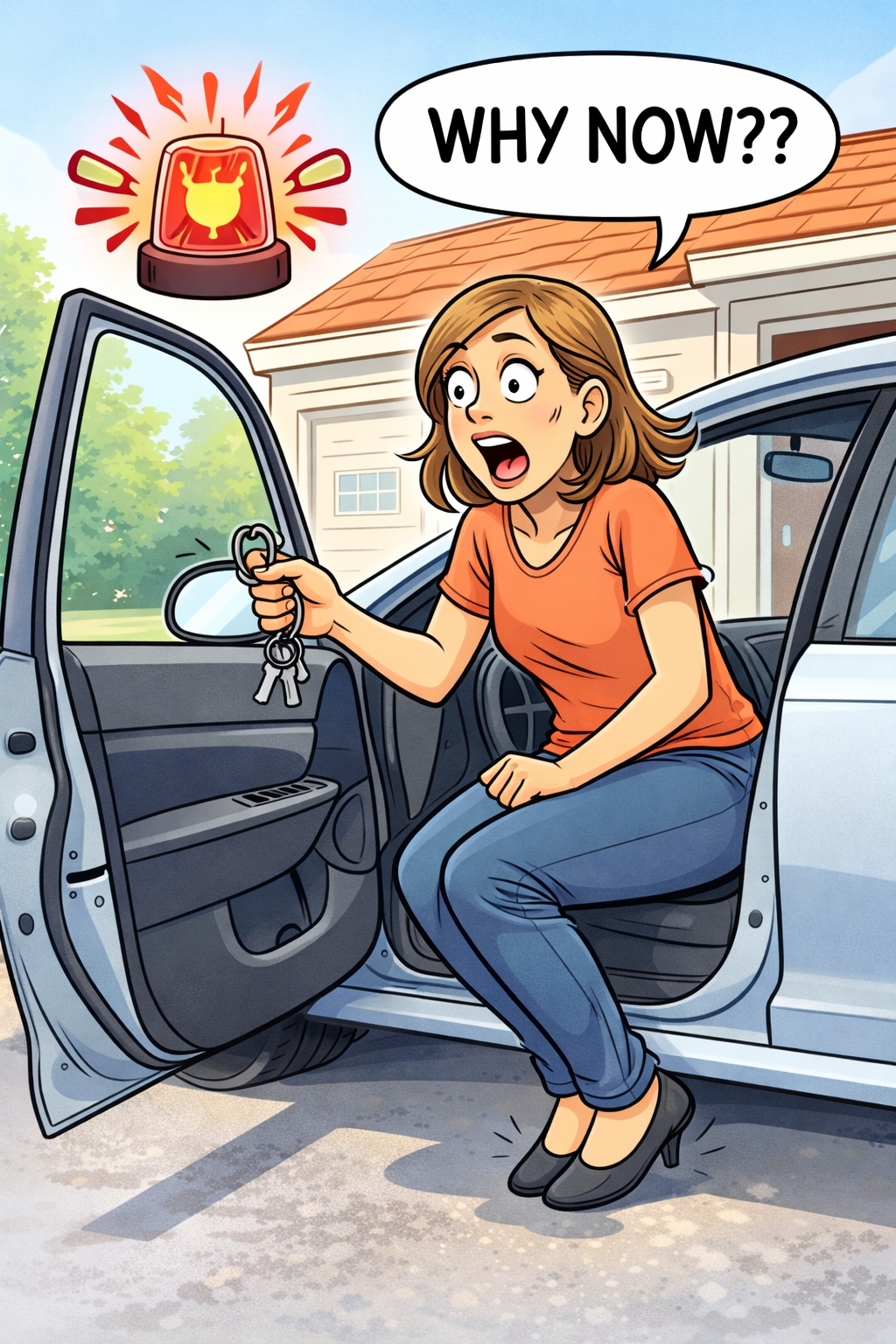
Have you ever been fine all day, holding your bladder just fine, and then the second you pull into your driveway or put your key in the door, you suddenly feel like you're going to pee your pants? You almost don't make it to the bathroom? Or worse, you don’t.
This is called "key; in; the; lock syndrome" or "driveway urgency," and it's a perfect example of a nervous system-triggered bladder response.
It's not that your bladder suddenly got full in the last 30 seconds. It's that your brain associates, "home" with "safety" and "permission to release."
So, it triggers a massive bladder contraction before you've even reached the bathroom.
It's a Pavlovian response. Your nervous system has learned a pattern, and now it's running that pattern automatically.
How Hydration and Inflammation Affect This
When you're well; hydrated and your inflammation is low, the nervous system's "background noise" is quieter. The signals are clearer. The triggers aren't as explosive.
But when you're dehydrated and inflamed, everything is amplified. Your nerves are already on high alert. So when a trigger happens, like pulling into your driveway, it's not a gentle nudge. It's a full-blown alarm.
Restoring proper hydration and lowering systemic inflammation helps calm the nervous system so these automatic responses aren't so intense.
SECTION 8: Modern Disruptors
Caffeine, Alcohol, and Artificial Sweeteners
We can't talk about bladder health without addressing the substances that directly irritate the bladder lining. These are called bladder irritants, and they're everywhere in modern life.
Caffeine
Yes, caffeine is diuretic. It makes you pee more. But that's not the only problem.
Caffeine is also a nervous system stimulant. It makes your detrusor muscle, the smooth muscle that contracts to empty your bladder, "twitchy" and reactive. It can trigger bladder spasms and increase urgency.
If you're someone who drinks coffee or tea all day long, you're essentially keeping your bladder in a state of constant stimulation.
Does this mean you have to give up coffee completely? Not necessarily. But it does mean you should pay attention to how your body responds. If you notice increased urgency or frequency on days when you drink more caffeine, that's your body giving you information.
Artificial Sweeteners
This one surprises a lot of women. Artificial sweeteners like aspartame, saccharin, and sucralose can be highly irritating to the bladder lining.
Multiple studies show that for some women, artificial sweeteners are actually more irritating than regular sugar. They can trigger urgency, frequency, and even pain.
If you're drinking diet sodas, sugar-free flavored waters, or using artificial sweeteners in your coffee, and you're experiencing bladder symptoms, try eliminating them for two weeks and see what happens.
Alcohol
Alcohol is a triple threat:
- It's a diuretic (makes you pee more)
- It dehydrates the fascia
- It's a central nervous system depressant that can interfere with the "pre-setting" of your pelvic floor muscles we talked about in Module 1.
That means your pelvic floor can't respond as quickly when you cough or sneeze. You're more likely to leak.
Again, this doesn't mean you can never have a glass of wine. But it does mean you should be strategic about it. Hydrate well before and after. Don't overdo it. And don't be surprised if your symptoms are worse the next day.
SECTION 9: The Path Forward
Systemic Restoration
If we want to truly support pelvic health, we have to stop focusing only on the "squeeze" and start focusing on the environment.
Your pelvic floor exists within a chemical, hormonal, and inflammatory environment. If that environment is hostile (dehydrated, inflamed, acidic), no amount of Kegels will fix the problem.
But if we can create a supportive environment, the pelvic floor can do its job without constantly being under siege.
Here's the path forward:
STEP 1
Dilution
Gently increase your water intake (with minerals) to stop the chemical burning of your bladder wall. Aim for consistent, moderate sips throughout the day, not chugging. Your urine should be pale yellow, not dark or concentrated.
STEP 2
Lubrication
Support your fascia through proper hydration so your bladder has room to expand comfortably. Remember the sponge analogy. Hydrated fascia is happy fascia.
STEP 3
Desensitization
Lower systemic inflammation so your nerves stop "screaming" at low volumes. This might mean addressing your diet, your stress levels, your sleep, or your gut health. It's all connected.
STEP 4
Nervous System Regulation
Give your body permission to relax. Practice diaphragmatic breathing. Create moments of genuine rest. Break the chronic stress cycle that's keeping your pelvic floor in "guard mode."
By now, you can see that bladder comfort isn’t about controlling symptoms, it’s about supporting the environment your pelvic system lives in. When hydration is inconsistent, inflammation is high, and the nervous system stays on alert, the bladder doesn’t fail, it reacts. And once you understand that, the urgency, burning, and sensitivity start to make sense.
Nothing in this module was about forcing change or following rigid rules. It was about restoring conditions that allow your bladder, fascia, and nerves to calm down and communicate more clearly. Small, steady shifts in hydration quality, inflammation load, and nervous system regulation can dramatically change how your body feels over time. You’re not chasing perfection here, you’re creating a more supportive baseline so your pelvic system doesn’t have to work against chemistry and stress every day.
As you move forward, keep paying attention to how your body responds. Comfort is information. Sensitivity is information. And now, you have the context to interpret those signals instead of fighting them.

0 Comments