
System overload!
Why bladder symptoms reflect your total stress and inflammation
Download your worksheet Link (add a tokin images of a worksheet )
Click Play to listen to audio module on site.
03 MODULE
Listen offline or on your phone. Click the download button and Save to your location choice. If you lose it, look in your Downloads folder.
03 MODULE
Reset
This module is about understanding what happens when your body has simply been carrying too much for too long.
Bladder symptoms often show up not because something is wrong, but because the system is overloaded.
As you move through this lesson, you’ll learn how easing the total load can change the signals your body is sending.
Module 3
The Inflammatory Load
Why Your Bladder Is Overreacting
INTRODUCTION
The "Full Cup" Metaphor
Imagine your body's ability to handle stress and irritation as a cup. Every day, you pour things into that cup: a poor night's sleep, a stressful work deadline, a processed meal, hormonal fluctuations, a sedentary afternoon sitting at your desk, maybe an argument with your partner or worrying about your aging parents.
For a long time, the cup doesn't overflow.
You feel "fine."
You're managing.
You're handling it.
But then, one day, you add one tiny drop. Maybe it's just a second cup of coffee. Or a slightly more stressful morning. Or you skip lunch because you're too busy. And suddenly, the cup overflows.
You have a bladder flare.
Urgent, frequent trips to the bathroom. That feeling like you're not going to make it. Maybe even pain or pressure that wasn't there yesterday.
Most women try to "fix the drop." They cut out the coffee. They avoid the specific food. They blame the one thing that happened right before the symptoms showed up.
But here's the expert approach: empty the cup.
This module is about lowering your total inflammatory load so your pelvic system has the margin it needs to function without constantly triggering emergency signals.
By now, you understand that pelvic symptoms are rarely about one weak muscle or one bad habit. They're the result of how pressure, signaling, hydration, and tissue health interact over time.
In this module, we're going to zoom out even further. Instead of focusing only on what's happening inside your pelvis, we're going to look at what's constantly influencing it from the outside.
The pelvic floor does not exist in isolation. It responds to the inflammatory environment created by your gut, your hormones, your stress load, your sleep quality, and your daily inputs.
This matters because many women do "the right things" and still don't see improvement. They drink enough water. They do their exercises. They follow the advice. But when inflammation remains elevated system; wide, pelvic tissues stay reactive. Signals stay loud. Healing feels slow or inconsistent.
By the end of this lesson, you'll understand:
- How systemic inflammation makes your pelvic nerves hypersensitive
- Why your gut health directly affects your bladder (it's not just about pressure)
- How hormonal changes amplify inflammatory signaling
- The surprising lifestyle factors that keep your cup full
- Practical strategies to lower your inflammatory load without overwhelm
Let's start by understanding what inflammation actually does to your pelvic tissues.
Section 1: What Inflammation Does to Your Pelvic System
When Protection Becomes a Constant Alarm
Inflammation is not inherently bad. It's a necessary part of healing and defense. When you cut your finger, inflammation brings white blood cells to fight infection and start repair. That's acute inflammation, and it's protective.
The problem arises when inflammation becomes chronic and low-grade, never fully resolving. It's like a smoke alarm that won't turn off. The alarm is supposed to protect you from fire, but if it's constantly blaring because of a little steam from the shower, it stops being helpful and starts being exhausting.
When chronic inflammation persists in your body, tissues become sensitized. Nerves fire more easily. Muscles stay guarded. Blood flow patterns shift. Everything becomes reactive.
The pelvic region is particularly vulnerable because it sits at the intersection of multiple systems: digestive, hormonal, musculoskeletal, and nervous. It's like a busy intersection where traffic from four different directions converges. If there's congestion on any one road, the whole intersection backs up.
How Inflammation Affects Pelvic Tissues
Pelvic tissues are richly innervated, meaning they're packed with nerve endings. They're also highly responsive to chemical signals circulating in your bloodstream.
When inflammatory markers remain elevated (even subtly), the bladder and pelvic floor behave as if they're under constant threat. They stay in a state of heightened alert.
This is why symptoms can feel disproportionate to findings. You go to the doctor. Imaging looks normal. Urine tests come back "fine." There's no infection, no tumor, no structural abnormality. Yet urgency, pressure, discomfort, or nighttime waking persist.
From a systems perspective, your pelvic floor is not malfunctioning. It's responding appropriately to an environment that hasn't fully calmed down.
Think of it this way: if you're trying to have a conversation in a crowded, noisy bar, you have to shout to be heard. Your bladder and pelvic floor are doing the same thing. When the background inflammation is loud, they have to "scream" (urgency, pain, spasm) to get your attention.
As you lower the inflammatory load, the "bar" gets quieter. You start to feel the subtle signals of your body again. You realize you don't have to pee right now. You just have a gentle "filling" sensation. Your pelvic floor stops clenching for dear life and starts moving fluidly with your breath again.
Section 2: The Gut-Pelvic Connection
It's More Than Just Pressure
The gut and pelvis share more than just proximity. They share nerves, blood supply, immune signaling, and pressure dynamics. What happens in your gut absolutely affects what happens in your bladder and pelvic floor.
For a long time, we thought the gut only affected the bladder through physical pressure. If you're constipated, the full bowel presses against the bladder, making you feel like you have to pee even when your bladder isn't full. That's true. But the biochemical connection is even more powerful.
Neural Cross-Talk: When the Brain Gets Confused
Here's something fascinating from neurology: nerves from your colon and nerves from your bladder often travel along the same pathways (through the dorsal root ganglia) to reach your brain.
This is called convergent afferent signaling. Multiple organs send signals along the same "electrical wire."
So, if your gut is inflamed, maybe you have IBS, chronic constipation, or a food sensitivity, those nerves are "shouting." And because the signals travel on the same wire as the bladder signals, your brain can get confused.
It interprets gut irritation as bladder urgency.
This is why you might feel an intense need to pee when you actually just need to have a bowel movement. It's not a weakness of your pelvic floor. It's neurological echoes from your gut.
The Microbiome and the Urobiome
We used to think the bladder was sterile. Turns out, it's not. The bladder has its own community of bacteria called the urobiome.
When your gut microbiome is in a state of dysbiosis (imbalance), it produces inflammatory metabolites that enter your bloodstream. These inflammatory compounds circulate throughout your body, including to your bladder, where they can disrupt the protective GAG layer we talked about in Module 2.
There's also something called the estrobolome. This is a specific group of gut bacteria responsible for metabolizing and clearing estrogen.
If your gut is sluggish or imbalanced, you can end up with poor estrogen clearance or estrogen dominance, both of which increase pelvic tissue inflammation.
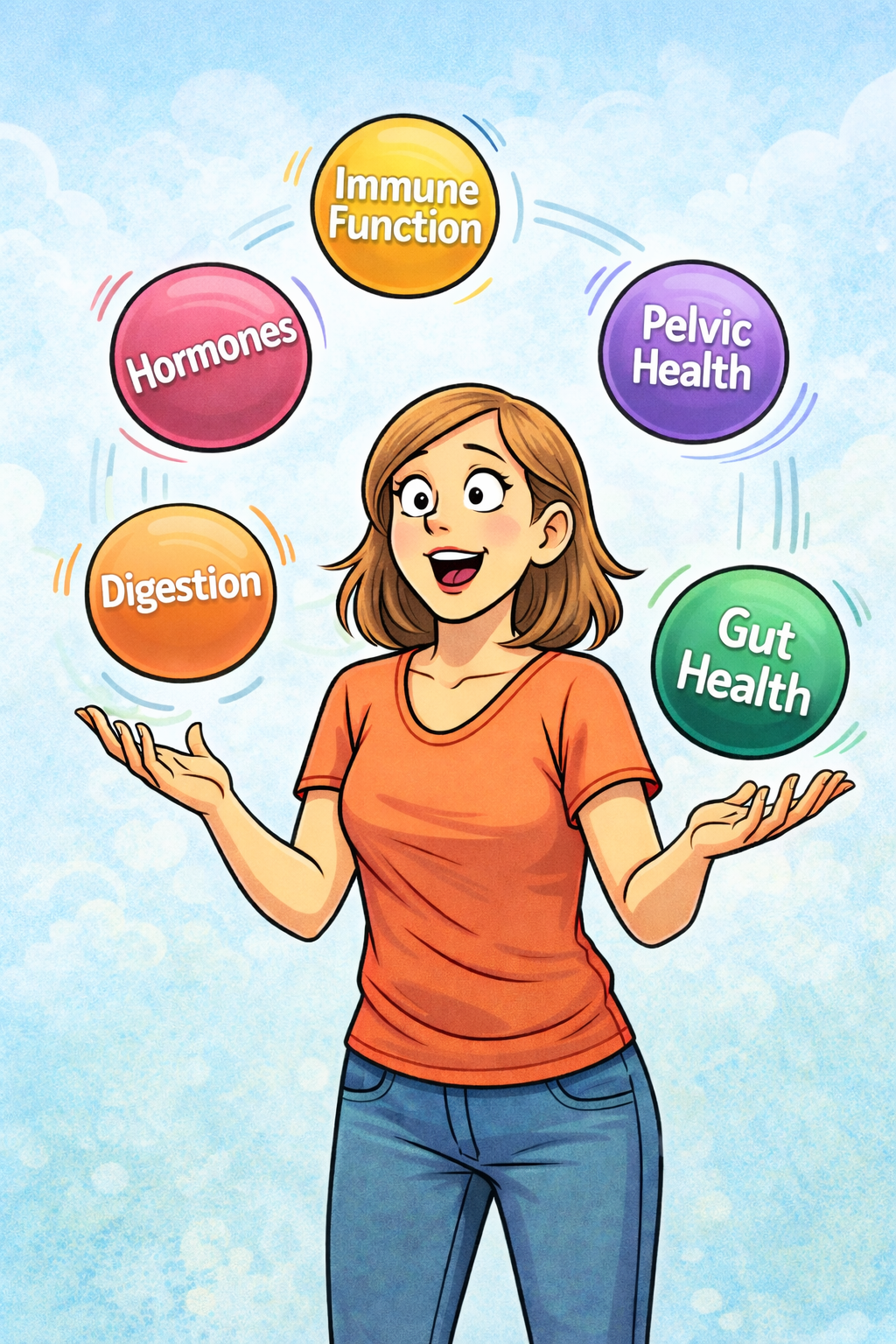
So gut health isn't just about digestion. It's about hormonal balance, immune function, and pelvic tissue health.
Constipation: The Silent Pelvic Floor Killer
Let's talk about something most people don't connect to pelvic health: chronic straining during bowel movements.
This is one of the single most common causes of mechanical pelvic floor damage.
When you strain repeatedly over time, maybe because you're constipated, or you have slow digestion, or you just push too hard, you're stretching the pudendal nerve. This is the main nerve that supplies sensation and motor control to your pelvic floor.
Once that nerve is stretched or compressed repeatedly, it loses its ability to accurately "tell" the pelvic floor muscles when to contract. Over time, this leads to what's called neurogenic weakness, where the muscle itself is actually healthy, but the "power cord" connecting it to your brain is frayed.
You can do all the Kegels in the world, but if the nerve signal isn't getting through clearly, the muscle won't respond properly.
The Takeaway
Addressing constipation isn't just about comfort. It's about protecting the nerve supply to your pelvic floor.
SECTION 3: Hormones as Inflammatory Modulators
When Hormones Turn Up the Heat”
Hormones do far more than regulate your menstrual cycle or your ability to get pregnant. They influence immune activity, tissue repair, fluid balance, and nerve sensitivity throughout your entire body.
Estrogen, in particular, has anti-inflammatory properties. It supports blood flow, collagen integrity, and tissue resilience. It also helps stabilize certain immune cells (like mast cells) that would otherwise release inflammatory chemicals at the slightest provocation.
During perimenopause and menopause, as estrogen levels fluctuate wildly and then decline, inflammatory signaling often increases. And this doesn't happen in isolation.
Hormonal shifts interact with stress hormones, sleep disruption, blood sugar regulation, and gut health.
The result is often a sudden escalation of symptoms that seem to come out of nowhere but are actually deeply connected.
Think of Estrogen as Your "Thermostat"
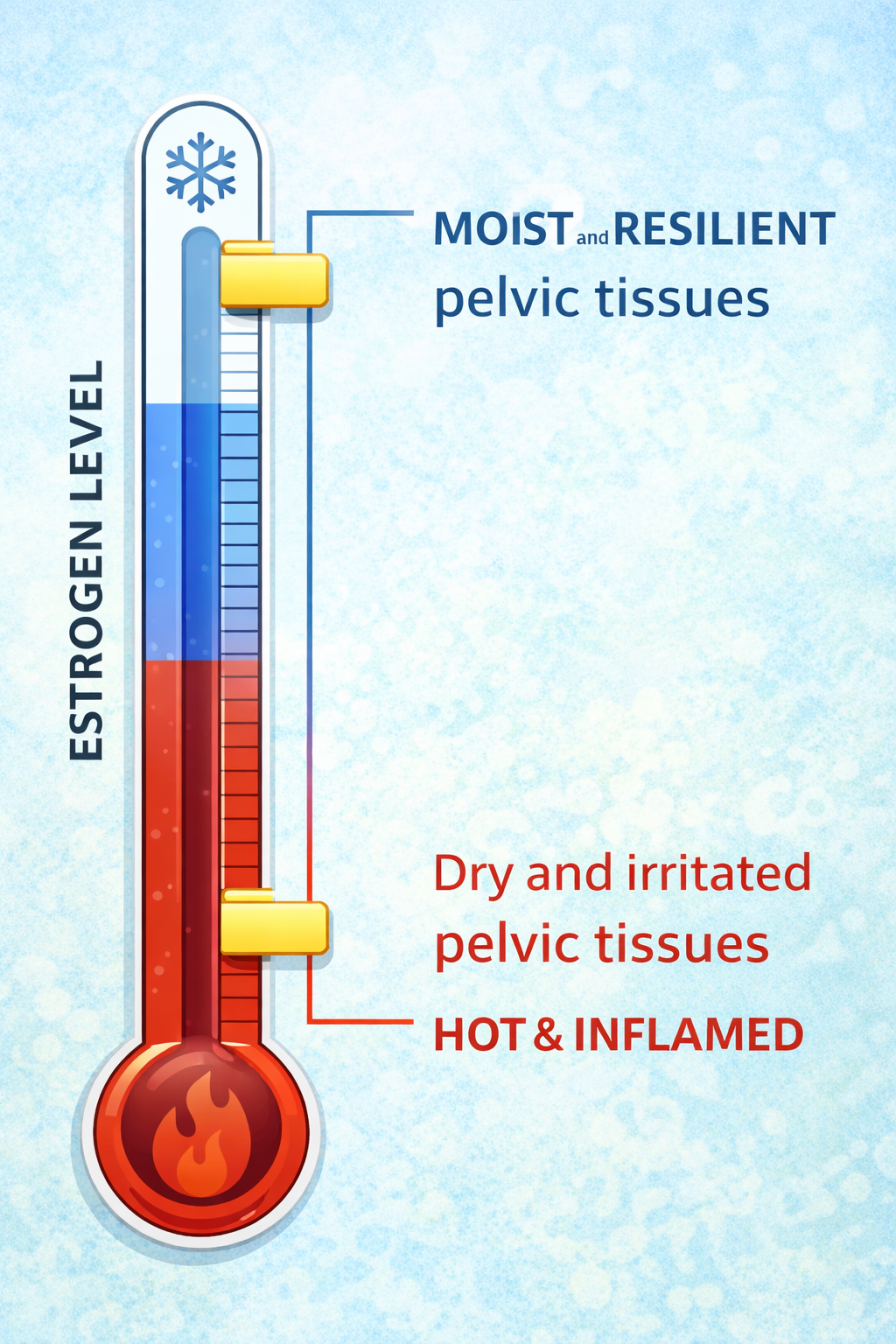
When estrogen is optimal, your pelvic tissues are "cool," moist, and resilient. They can handle normal irritants without overreacting.
When estrogen drops or fluctuates wildly (as it does in perimenopause), the "temperature" rises. Tissues become inflamed, dry, and hypersensitive.
The Mast Cell Connection
Pelvic tissues are rich in mast cells. These are the cells responsible for allergic reactions and histamine release. You know that feeling when you have an allergic reaction and your skin gets itchy and inflamed?
That's mast cells releasing histamine.
Estrogen helps stabilize mast cells. It keeps them calm.
When estrogen drops, mast cells become "twitchy." They release histamine and inflammatory cytokines at the slightest provocation.
This is why many women develop new sensitivities in their 40s. Suddenly, certain soaps, detergents, fabrics, or foods cause pelvic itching, burning, or urgency that they never had in their 20s or 30s.
It's not that you suddenly became "high maintenance". It's that your mast cells lost their stabilizing hormone and are now overreacting to things that used to be fine.
Prostaglandins and the Menstrual/Menopause Connection
If you've noticed that your bladder feels "crazy" at certain times of the month, you're not imagining it.
Before your period, or during the low-estrogen phases of perimenopause, your body produces more prostaglandins. These are hormone; like chemicals that cause smooth muscle contraction, which is why you get menstrual cramps, and increase pain sensitivity.
Prostaglandins make your bladder muscle more "twitchy" and more reactive. They also amplify pain signals.
So, the same amount of urine that felt fine last week suddenly feels urgent and uncomfortable this week. Your inflammatory markers are literally "tuning" your bladder to be more sensitive.
Understanding this helps reframe midlife symptom onset. It's not that your body suddenly broke. It's that the buffering systems that once kept inflammation in check are changing.
SECTION 4: The Vagus Nerve and Pelvic "Guarding"
When the Body Can’t Find the Off Switch
We cannot talk about inflammation without talking about the vagus nerve. This is the longest nerve in your body, and it's often called the "wandering nerve" because it travels from your brainstem down through your neck, chest, and abdomen, touching almost every major organ along the way.
The vagus nerve is part of your parasympathetic nervous system (your "rest and digest" mode). And it plays a critical role in regulating inflammation throughout your body.
The Inflammatory Reflex
The vagus nerve acts like a brake pedal for inflammation. Here's how it works:
The vagus nerve senses inflammation in your gut, pelvis, and other organs. It sends a signal to your brain. Your brain then releases anti; inflammatory neurotransmitters that travel back down the vagus nerve to calm the inflammation.
It's like a feedback loop. Inflammation goes up. Vagus nerve says, "Hey, we've got a problem here." Brain says, "Okay, I'm sending help." Anti-inflammatory signals come down and calm things down.
But here's the problem: if you're in a state of chronic sympathetic activation (chronic stress), your vagus nerve is "muted." It can't do its job effectively.
Without that brake pedal, inflammation in the pelvis can spiral out of control.
And what does your pelvic floor do in response? It guards. It tightens up to protect your internal organs from the perceived threat of inflammation.
This is why relaxation exercises, deep breathing, or gentle yoga often help bladder symptoms more than strength training alone. You're not just stretching a muscle. You're reactivating the vagus nerve to turn off the inflammatory fire.
SECTION 5: Common Lifestyle Contributors to Pelvic Inflammation
Small Daily Inputs, Big Pelvic Impact
Inflammation is cumulative. It is built from many small inputs rather than one dramatic cause. Think of it as filling that cup we talked about in the introduction.
Some of the most common lifestyle factors that fill the cup include:
Poor Sleep or Frequent Nighttime Waking
During sleep, your body performs "housekeeping" on inflammatory waste. Your brain has a waste; clearance system called the glymphatic system that's most active while you sleep. It clears out metabolic byproducts and inflammatory debris.
If your sleep is fragmented, often because you're waking up to pee, that waste doesn't get cleared effectively.
This creates a vicious cycle:
You wake up to pee → Sleep is disrupted → Inflammation increases → Your bladder becomes more sensitive → You wake up to pee even more.
Chronic Stress
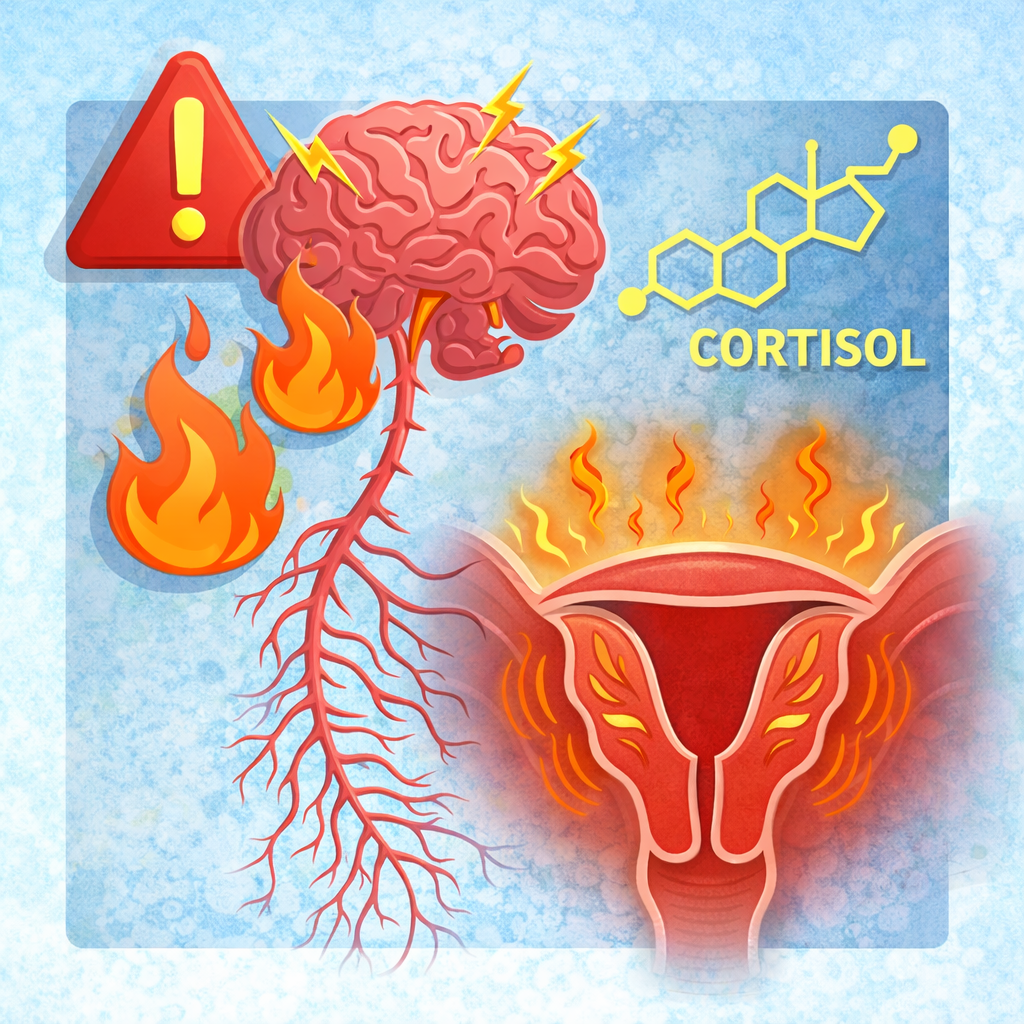
Chronic stress elevates cortisol and keeps your nervous system in a state of vigilance. Remember that "guarding reflex" we talked about? Chronic stress keeps your pelvic floor in guard mode, which increases tension and inflammation in the tissues.
Blood Sugar Swings
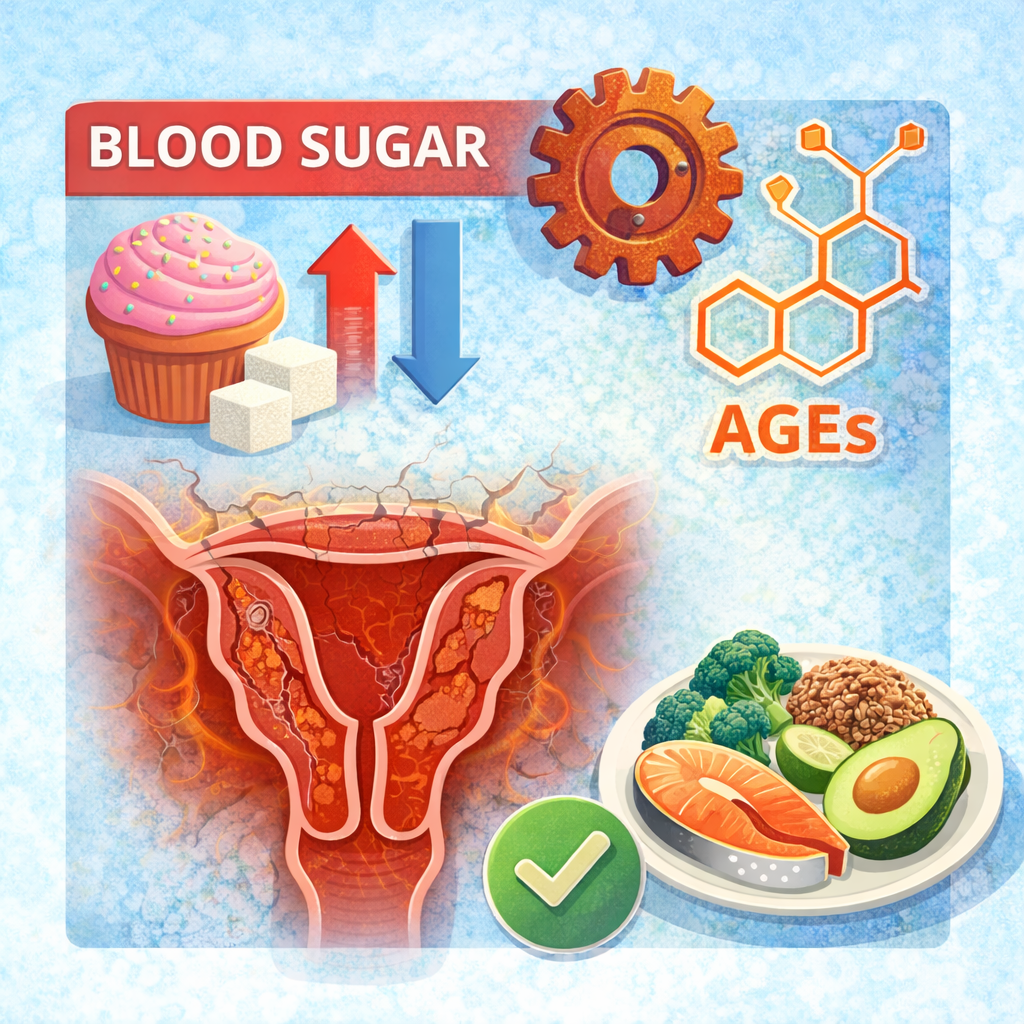
Every time your blood sugar spikes and crashes, your body produces something called Advanced Glycation End-products (AGEs). These are highly inflammatory molecules that essentially "rust" your collagen.
Since your pelvic floor is about 80% collagen andfascia, blood sugar swings literally make your pelvic support system more brittle and less resilient.
This is why eating balanced meals with protein, healthy fats, and fiber, instead of grabbing a muffin or skipping meals, actually supports pelvic health.
Highly Processed Foods
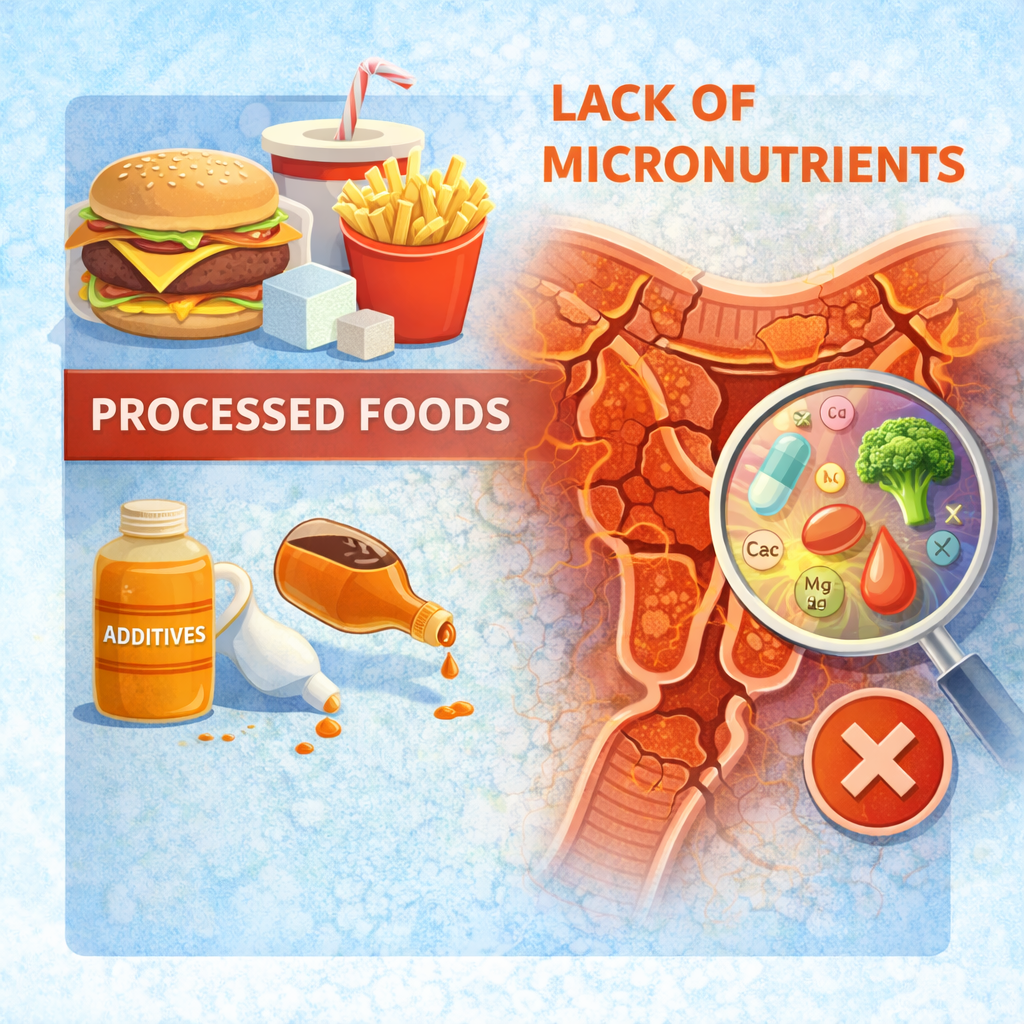
Processed foods lack the micronutrients your body needs for tissue repair. They also often contain additives, preservatives, and inflammatory oils that increase the overall inflammatory load.
You don't have to eat perfectly. But consistently eating foods that lack nutritional density means your body doesn't have the raw materials it needs to repair and maintain healthy tissues.
Under-Eating or Inconsistent Fueling
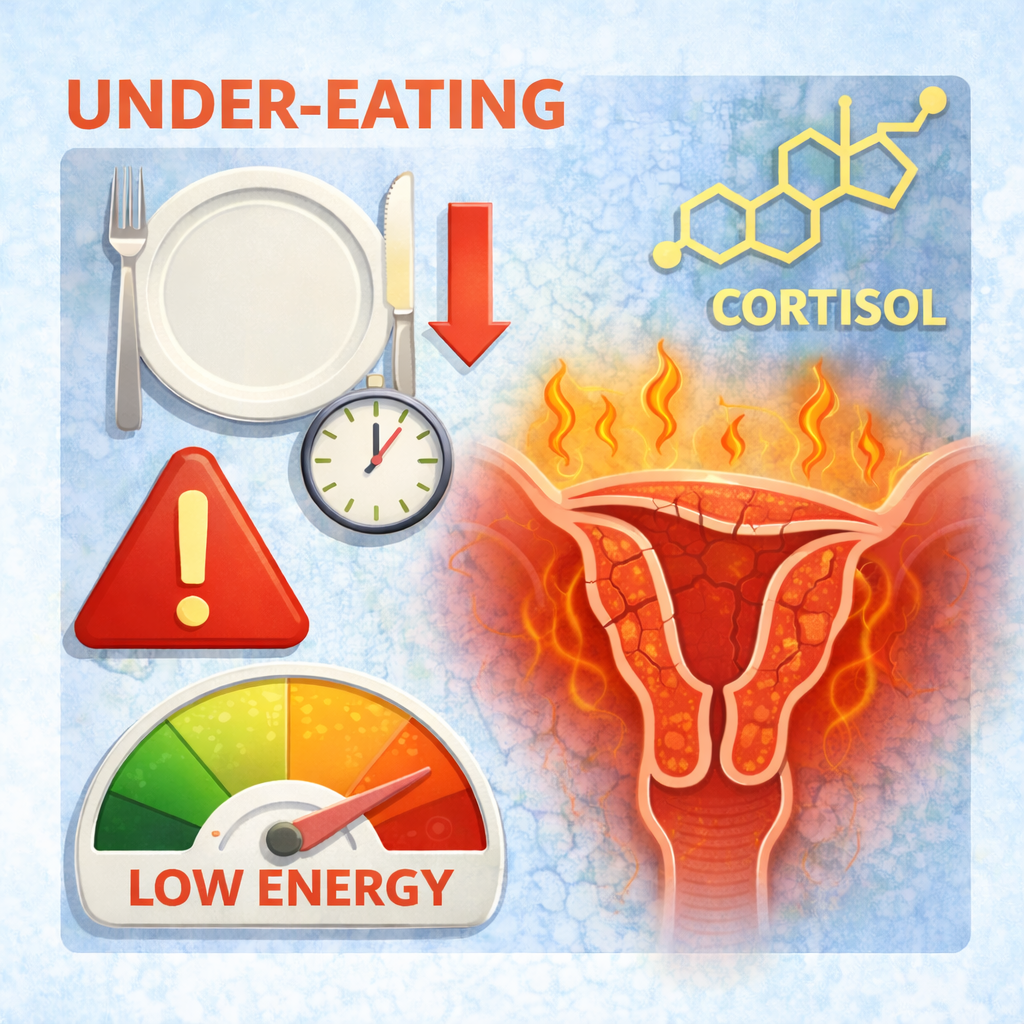
This one surprises a lot of women. If you're chronically under-eating, maybe because you're trying to lose weight, or you're just "too busy" to eat regularly, you're stressing your body.
Your body interprets chronic under-fueling as a threat. It increases stress hormones. It slows down repair processes. And it increases inflammation.
Prolonged Sitting & Limited Movement Variety
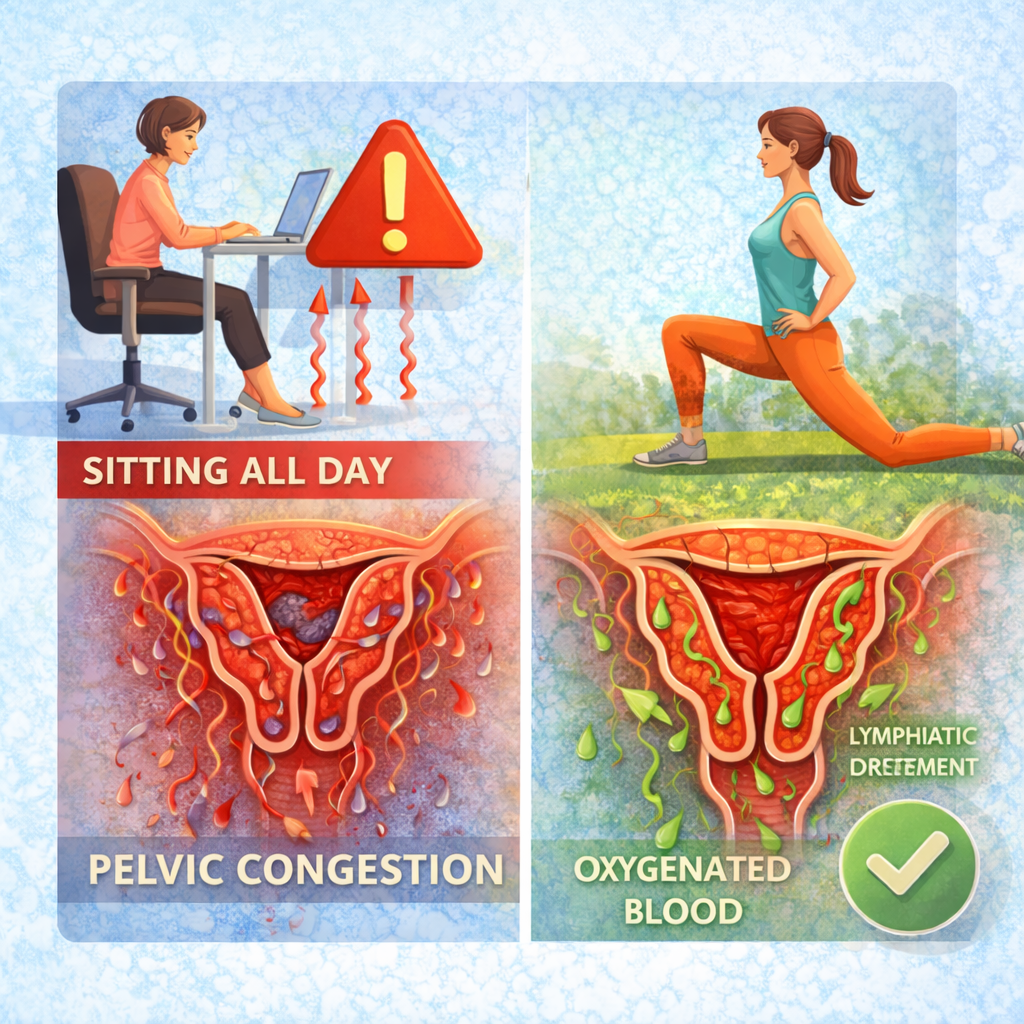
If you sit all day, blood and lymph fluid "pool" in your pelvic basin. This creates pelvic congestion, which is essentially a traffic jam of inflammatory fluid that's not draining properly.
Movement, especially varied movement in different positions, helps circulation. It brings fresh, oxygenated blood to your pelvic tissues and helps drain inflammatory waste through your lymphatic system.
You don't need intense exercise. You just need consistent movement throughout the day.
None of these factors are failures or personal flaws.
They’re common, understandable patterns in a modern life that asks a lot from your body and rarely gives it space to recover. The goal isn’t to eliminate every stressor, but to recognize which ones are quietly filling your cup so you can start lowering the overall load. Awareness alone creates relief, because once you see the pattern, you’re no longer fighting a mystery.
SECTION 6: Practical "Down-Regulation" Strategies
How to Calm the System Without Overhauling Your Life
So, how do we empty the cup? We don't do it with a perfect diet or a rigid protocol. We do it by lowering the total load with a few sustainable strategies.
Strategy 1: "Mechanical" Decongestion (Inversions)
Remember that pelvic congestion we just talked about? One of the fastest ways to reduce it is through gentle inversions.
An inversion is any position where your hips are higher than your heart. This uses gravity to drain inflammatory fluid out of the pelvis and back toward your heart for processing and clearance.
How to do it: Lie on your back and prop your hips up on a pillow or bolster. Or lie with your legs up the wall. Even just 5 minutes a day can make a noticeable difference in how heavy or congested your pelvis feels.
Strategy 2: The Gluten/Dairy Experiment
I know, I know. You've heard this before and maybe rolled your eyes. But hear me out.
Clinical data shows that for a significant subset of women with bladder urgency, gluten and dairy act as systemic irritants. This isn't necessarily a full-blown allergy or celiac disease. It's about something called molecular mimicry.
The proteins in gluten and dairy can look similar enough to proteins in your bladder lining that your immune system gets confused. It attacks or irritates the "look; alike" proteins in your bladder.
The experiment: Try 14 days without gluten and dairy and see if your urgency signal quiets down. It's often the fastest way to "empty the cup" and figure out if these foods are contributing to your symptoms.
If you notice a significant improvement, you have valuable information. If you don't notice a difference, at least you know these aren't major triggers for you.
Strategy 3: Magnesium (The Pelvic "Valium")
Most women are deficient in magnesium, especially when they're under stress. Magnesium is required for over 300 enzymatic reactions in your body, including muscle relaxation and nerve calming.
Taking a high; quality magnesium BI glycinate supplement (this form is well; absorbed and doesn't cause digestive upset) can:
Dampen the "twitchiness" of your bladder muscle (the detrusor)
- Help your pelvic floor muscles relax
- Lower overall inflammatory signaling
- Improve sleep quality
Dosage: Most women benefit from 300-400 mg of magnesium BI glycinate before bed.
Strategy 4: Support Your Gut (Gently)
You don't need a complicated gut; healing protocol. Start simple:
- Prioritize regular bowel movements. If you're constipated, address it. Magnesium can help with this too. So can adequate water, movement, and fiber from whole foods.
- Consider a probiotic with strains that support both gut and urinary health, like Lactobacillus Rhamnosus and Lactobacillus Reuteri. See the Resource page for recommendations.
- Eat fermented foods a few times a week if you tolerate them. Foods like: sauerkraut, kimchi, plain yogurt, kefir.
The goal is to reduce gut inflammation and support the microbiome, which will reduce the inflammatory signals traveling to your pelvis.
Strategy 5: Activate Your Vagus Nerve
Remember that brake pedal for inflammation? You can actively turn it on through specific practices:
- Diaphragmatic breathing: Slow, deep belly breaths activate the vagus nerve and shift you into parasympathetic mode. Try 5-10 slow breaths before meals and before bed.
- Humming or singing: The vagus nerve runs through your vocal cords. Humming or singing actually stimulates it. (Bonus: it's free and kind of fun.)
- Cold exposure: Splashing cold water on your face or ending your shower with 30 seconds of cold water stimulates the vagus nerve.
Gentle movement: Yoga, stretching, and walking in nature. All of these help activate the parasympathetic nervous system.
Down-regulation isn’t about fixing yourself or adding another item to your to-do list. It’s about giving your system the conditions it needs to feel safe enough to let go. When inflammation lowers and your nervous system settles, your pelvic floor doesn’t have to guard so aggressively, and signals start to normalize on their own. Small, consistent shifts create space. And space is where healing happens.
SECTION 7: Why Reducing Inflammation Improves Signal Quality
As inflammation decreases, something important happens. Signals become clearer.
The bladder can distinguish filling from fullness. You can tell the difference between "I should think about finding a bathroom soon" and "I need to go RIGHT NOW".
Your pelvic floor can respond without guarding. Muscles can contract and relax through their full range instead of staying stuck in a state of partial tension.
Nighttime urgency becomes less frantic. Maybe you still wake up once, but it's not the desperate, "I'm not going to make it" feeling.
Morning stiffness eases more quickly. You wake up and your body feels more like it used to.
This doesn't mean symptoms disappear overnight. It means the system regains tolerance.
This is a critical distinction. Healing in pelvic health is often about restoring margin, not achieving perfection.
When your inflammatory load is high, your system has no margin. One little stressor; a cup of coffee, a stressful morning, a poor night's sleep, pushes you over the edge into symptoms.
When your inflammatory load is lower, your system has room. You can have the coffee. You can have a stressful day. Your body can absorb those inputs without falling apart.
SECTION 8: Restoring Agency Without Overwhelm
Believe In Your Power
One of the most empowering aspects of understanding inflammation is realizing that you have influence, even if you don't control every variable.
You can't control your hormones perfectly. You can't eliminate all stress. You can't always sleep through the night, especially if bladder symptoms are waking you up.
But you can lower the overall load. You can make strategic choices that give your system more margin.
And you don't need to change everything at once. In fact, trying to overhaul your entire life overnight often increases stress and inflammation. It fills the cup instead of emptying it.
The most effective approach is observational. Notice patterns. Track responses. Make one or two supportive changes and allow your system time to respond.
This is where patience becomes a strategy, not a personality trait.

0 Comments